Showing posts with label Hypercar. Show all posts
McLaren Hybrid

We will keep seeing a new model or new model variant released each year in the near future, as the manufacturer continues to add nuance and diversity to its range. So far it's been working a treat, with sales going up to 1,649 vehicles in 2014, up 18 percent over the previous year; they have set a target for 4,000 units annually by 2017.

McLaren Hybrid

McLaren CEO Mike Flewitt says he thinks half of the manufacturer's range will be made up of hybrids within the next ten years, although the shift could come around even sooner than that.

McLaren Hybrid

Still, 2025 seems like a feasible deadline, given that we've been announced of a "models onslaught" from McLaren, the most exciting of which will undoubtedly be the model created to slot in between the 650S and the P1.

PHOTOS GALLERY:

McLaren Hybrid McLaren Hybrid McLaren Hybrid McLaren Hybrid McLaren Hybrid McLaren Hybrid
2017 TVR Sagaris Supercar

A month passed since TVR announced a supercar revival in conjunction with Cosworth and Gordon Murray and now, the British marque is already accepting deposits for the upcoming automobile. It seems they mean business. As from July 7th, anyone interested in owning TVR's future vehicle can make a £5,000 ($7,800) deposit to practically reserve a car from the limited first year of production, believed to be in the "low hundreds", as Les Edgar, Chairman of TVR stated.

2017 TVR Sagaris Supercar

The reason why TVR took this decision is because the revival announcement sparked an unexpected wave of interest from the public, as John Chasey, Operations Director of TVR, said: "We've been totally blown away by the reaction to the new car. Our phone lines and online enquiry system went into meltdown when the news was announced, and we decided that we must begin to bring a structure to the enquiries and build a delivery pipeline well in advance of production. Volumes in year one will be limited as we ramp up production, so this allows us to reward those individuals prepared to make a financial commitment at this early stage."

2017 TVR Sagaris Supercar

Mind you, a £5,000 deposit isn't much for the person willing to spend a heap amount of cash on the car. Furthermore, TVR is offering a limited quantity of reduced deposits for the TVR Car Club members, during July, as a celebration of the club's 50th anniversary. Anyone who's been a member for more than 6 months gets to put only £2,500 ($3,903) on the line. Don't forget, the car will be powered by a Cosworth developed, naturally-aspirated, dry-sumped V8, believed to deliver somewhere around 450 horses.

2017 TVR Sagaris Supercar
Bugatti Veyron Hybrid

What do the hybrid hypercars lack? A top speed that’s on par with Koenigsegg or Bugatti's ageing current Veyron. Here, the VW-owned brand could step in and provide a hybrid hypercar that also has a very top speed – it will be designed specifically to regain that crown it seems.

Bugatti Veyron Hybrid

Autocar cites a German report confirming it really will be a hybrid. The Bild story, which quotes VW boss Martin Winterkorn, says the car will be good for 286 mph or 460 km/h thanks to a combined power output of 1,480 hp (1,500 PS).

Bugatti Veyron Hybrid

However, they really do need to create something special this time around, as competition in the hypercar sector now exists, whereas it didn't in 2004 when the Veyron came out. The car is expected to debut in 2018.

PHOTOS GALLERY:

Bugatti Veyron Hybrid Bugatti Veyron Hybrid Bugatti Veyron Hybrid
Aston Martin DB9 GT

Powered by an uprated version of the 6.0-liter V12 engine producing 547PS (540hp) at 6,750 rpm and 620Nm (457lb-ft) of torque at 5,500 rpm, the new Aston Martin DB9 GT is the most powerful DB9 ever made. Mated to the Touchtronic II six-speed transmission with electronic shift-by-wire control system, the engine allows the DB9 GT to sprint from 0 to 100 km/h (62 mph) in 4.5 seconds and to reach a top speed of 295 km/h (183 mph).

Aston Martin DB9 GT

In addition to the power update, the DB9 GT gets significant equipment changes including the arrival of the AMi II touch-sensitive Aston Martin infotainment system. AMi II offers a revised menu structure which is said to make using the system even more user-friendly.

Aston Martin DB9 GT

Key improvements were made in areas including text message integration, vehicle status information and extended background themes for greater personalization. Ami II offers AM, FM, DAB and SDAR reception (US only), USB ports and Bluetooth audio streaming.

Aston Martin DB9 GT

From a styling point of view, the Aston Martin DB9 GT distinguishes itself from lesser DB9s thanks to subtle GT badges, black painted splitter and diffuser, revised headlights and taillights and new ten-spoke 20-inch alloy wheels. Other exterior details include black anodized brake calipers and a GT engraving on the aluminum fuel filler cap.

Aston Martin DB9 GT

Customers can further customize the car with carbon fiber taillight inserts, side strakes, front splitter and rear diffuser, as well as graphite, diamond-turned ten-spoke alloy wheels and alternative brake caliper colors.

The interior of the DB9 GT features "GT" embroidery on the leather seats, an iridium trim pack and Alcantara-wrapped steering wheel (Coupe only). Optional extras include center console finishes in Ice Mocha and Copper Cuprum, Duotone leather seats, door inserts and head linings, and a One-77-inspired steering wheel design.
Fisker Karma

The state of the art, 555,670 square-foot plant will be leased by Fisker and will provide 150 job opportunities for the city's residents. Furthermore, the company also intends to feature a showroom in the facility and provide tours of the car manufacturing process.

Fisker Karma

After filing for bankruptcy, Fisker was acquired by China's auto-parts giant - Wanxiang Group Corp - in 2014 for $149.2 million. Since then, the company was constantly determined to re-launch its activity, but always came short due to unforeseen circumstances.

Fisker Karma

It seems that Wanxiang Group Corp, a Chinese auto-parts giant that now owns Fisker Automotive and Technology Group, is looking to restart production of the hybrid sedan in a new factory located in the city of Moreno Valley, California.

Fisker Karma

The date of the official launch remains unknown, but perhaps by the end of 2016, Karmas will be swarming off the production line. Mind you, Wanxiang initially wanted to resume production of the Karma by the end of 2014 and then again by mid-2015; so, taking this into account, we can't speculate on an exact date, since the company rushes to announce things way too eagerly.

Fisker Karma

The design, done by a 15-year old from Bangkok, encapsulates PSC Motors CEO’s vision on how the car should look. Jennarong Muengtaweepongsa – the person responsible for the visual development of the car, and who you may remember from this Aston Martin study we showed you in April – states that the SP-200 SIN has its own unique style, but is also inspired by supercars ranging from the McLaren F1, to the Hennesey Venom GT.

According to the press blurb, the car was designed to be aerodynamically efficient and in case you forgot, it will allegedly have a 9.0-litre, V8 engine, which produces a total of 1650 HP with the help of an electric motor.

With such a beast under the hood and only weighing 1400 Kg (3100 lbs), PSC Motors estimates that the car will accelerate from 0 to 100km/h (62mph) in 2.8 seconds all the way to a top speed of over 450km/h (280mph). It'll be a hypercar-killer? No one knows!


2016 Porsche Boxster Spyder

According to the manufacturer, the Boxster Spyder features two prominent streamlined bulges that extend down along the rear lid behind the headrests, which are a tribute to the 718 Spyder from the 1960s.

The partially manually operated top is also a tribute to the roadsters from the past, while the fins that stretch back to the rear lend the vehicle’s characteristic design. Front and rear ends are taken from the Cayman GT4. The interior was designed to offer pure driving pleasure and the light sports bucket seats feature large side supports, while the steering wheel with a diameter of 360 mm ensures that the roadster can be driven with great agility.

Just like its predecessor, the new Boxster Spyder doesn’t offer radio or air conditioner as standard equipment in order to reduce weight, but if you really want them Porsche will offer these as an option at no extra cost.

Porsche says that the entire range of Boxster audio system is available but only as an option, just like the Porsche Communication Management (PCM) system. Pricing starts at 79,945 euros in Germany including sales tax and country-specific equipment features, while in the United States the vehicle costs $82,100, not including the $995 destination charge.

2016 Porsche Boxster Spyder

2016 Porsche Boxster Spyder

2016 Porsche Boxster Spyder

2016 Porsche Boxster Spyder

2016 Porsche Boxster Spyder

2016 Porsche Boxster Spyder

2016 Porsche Boxster Spyder

2016 Porsche Boxster Spyder

2016 Porsche Boxster Spyder

2016 Porsche Boxster Spyder

McLaren 570S Coupe

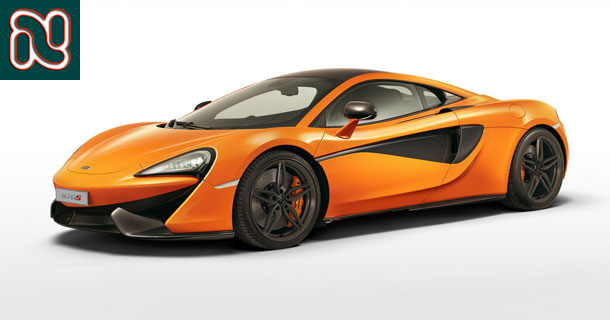
McLaren says that its new coupe is able to accelerate from 0 to 100 km/h (62 mph) in just 3.2 seconds, to 200 km/h (124 mph) in 9.5 seconds, while top speed is 328 km/h or 204 mph. Stopping power is ensured by the standard carbon ceramic brakes found behind the newly designed forged range of alloy wheel options wrapped with P Zero Corsa tyres (225/35/R19 at the front and 285/35/R20 at the rear).

Other highlights of the 570S Coupe include the unique carbon fiber MonoCell II chassis that weighs less than 80 kg. Thanks to the use of aluminum body panels and lightweight structure, the dry weight of the 570S Coupe is 1,313 kg (2,895 lbs), almost 150 kg lighter than its closest competitor. Minimised weight also means low fuel consumption and the 570S Coupe returns a fuel economy of 25.5 UK mpg or 11.1 l/100 km, while CO2 emissions are 258 g/km.

When it comes to design, the McLaren 570S Coupe is inspired by the other models found in company’s lineup, such as the 650S or the mighty P1. The front end features large LED headlamps offered as standard, as well as stylish air intakes, while from the side we find the intricately designed dihedral doors. From the rear, we observe the teardrop-shaped glasshouse, LED light blade rear lamps as well as an aluminum mesh and twin exhaust located below the rear bumper.

Inside, the sports car arrives with leather seats as standard, while racing seats are optional. Meanwhile, the dashboard and steering wheel are also wrapped in leather.

The new TFT digital instrument cluster changes configuration according to driving mode (Normal, Sport or Track), while the 7-inch IRIS touchscreen comes with integrated climate control functionality, Bluetooth connectivity and DAB digital / SIRIUR satellite radio (depending on the market). Thanks to the ergonomic design of the cabin, the 570S Coupe offers 150 liters of storage in the front luggage bay.

McLaren 570S Coupe

McLaren 570S Coupe

McLaren 570S Coupe

McLaren 570S Coupe

McLaren 570S Coupe

McLaren 570S Coupe

McLaren 570S Coupe

McLaren 570S Coupe

Design by N.A.N™ Apps